The Light‑Touch Coaching Method:
Why Your Body Leads, and I Guide
“The art of teaching is the art of assisting discovery. ”
Mark Van Doren
Light-touch Coaching
Every coach has their own style- this is mine.
If I’m lucky enough to work with you face‑to‑face in the studio, you’ll notice something quite quickly: I’m a light‑touch coach. It takes years to settle in as the type of coach you want to be, and this is me!
I don’t push, pull, or force your body into shapes. I don’t use heavy manipulation. I don’t override your strength with mine.
Over the years, I’ve learned that my role isn’t to move your body — it’s to help you understand it. And that requires a very different approach.
But before I go further, I want to say this clearly:
Heavier manipulation isn’t wrong. It isn’t unsafe. It isn’t “less professional.”
Every coach has their own style — and that’s what makes each of us special, unique, and valuable. Some coaches use more hands‑on techniques, and they do it beautifully. But for me, this is what I am comfortable with, and what I believe in as a coach.
What Light‑Touch Coaching Looks Like
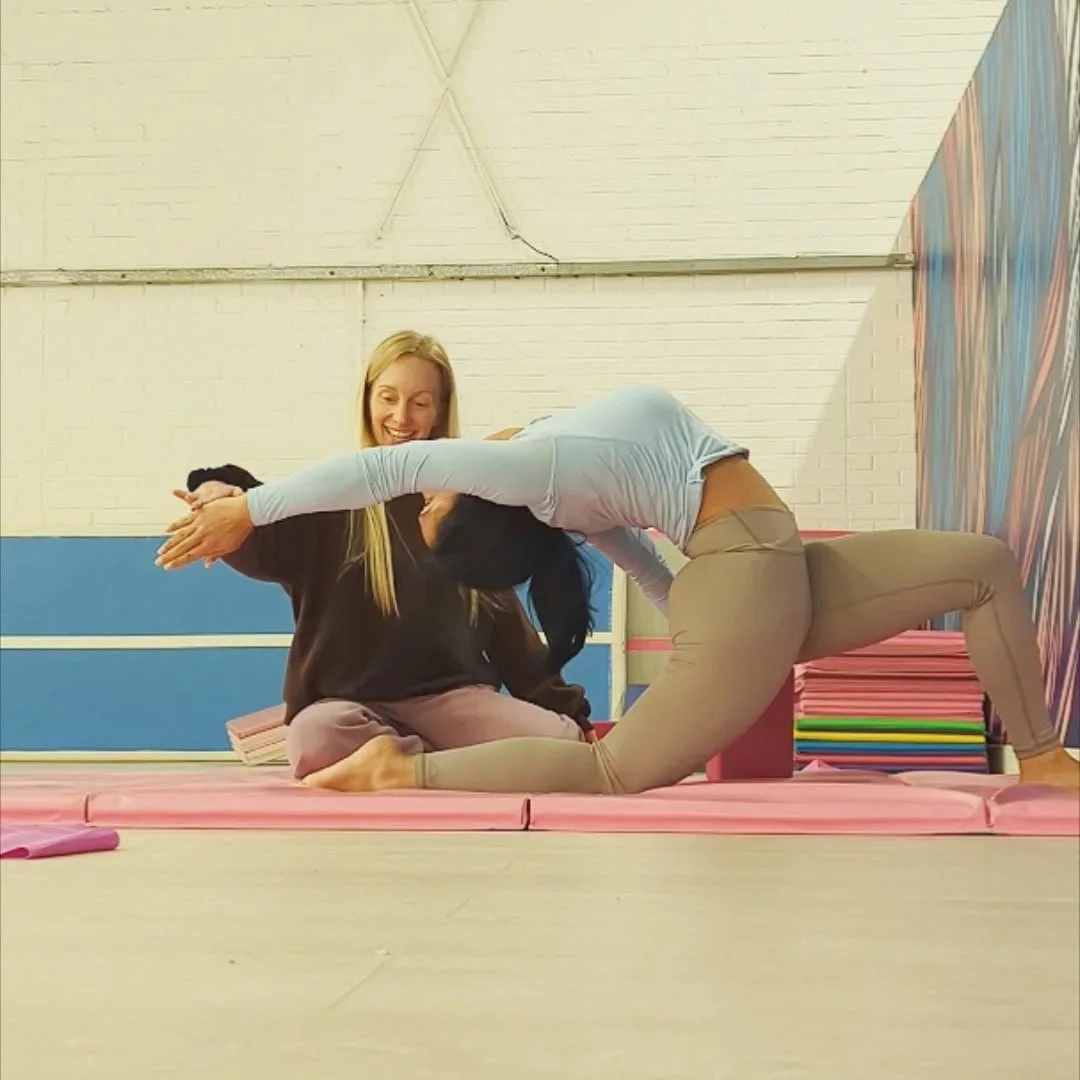
These photos are a good example of how my coaching looks when its face to face in a studio. This flexy student is super strong, focused, and pays attention to every tiny detail — which is why she’s progressing so beautifully. Because of this I can really push her, but pushing her doesn’t mean physically pushing her more, but challenging her flexibility more actually means doing less by me. As a coach I definitely don’t want to be dragging anyone deeper into positions their body isn’t ready for. I want to challenge my flexy students by making sure they stay in control and stay strong when pushing their flexibility.
I use light touches like this:
a tap to guide her confidence
a soft cue to show where to relax
a gentle stroke to encourage length
a fingertip reminder of where strength is needed
These touches support her strength — they don’t replace it. Because she’s doing all the real work. I’m simply helping her find clarity in her own body.
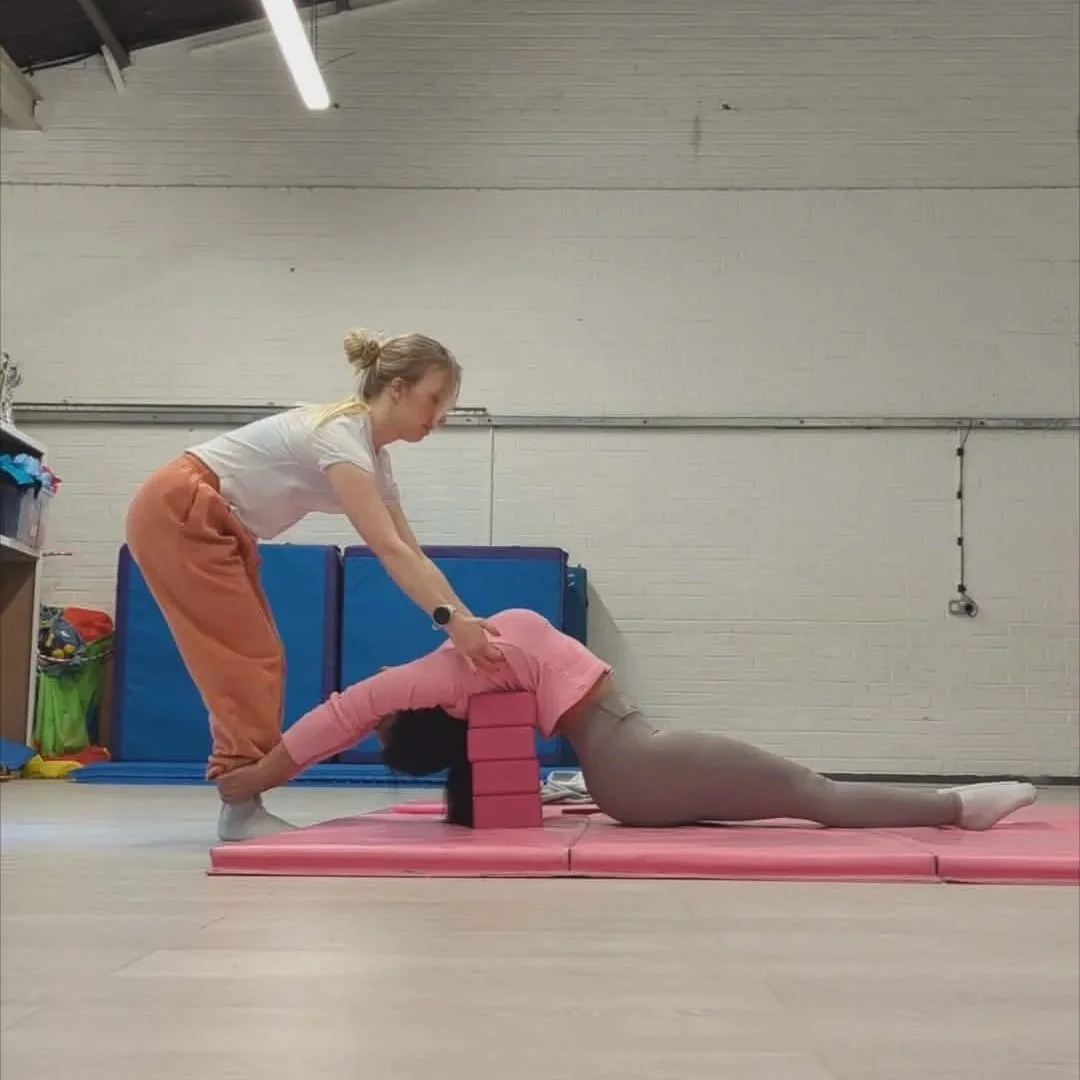
These light touches support her strength-
they don’t replace it!
Why I Don’t Use Heavy Manipulation
There’s another reason behind my light‑touch style, and it’s something I care about deeply:
I don’t want you to become reliant on me.
If I push you into a shape, your nervous system hasn’t learned how to get their itself. If I hold you there, your strength hasn’t earned it. If I do the work for you, you can’t repeat it safely on your own.
No one knows your body better than you, so in that bendy moment, I want to make sure you are working properly to the level you need to, not to the level I am forcing you to be.
My job is to make sure:
you build the strength to support yourself
you understand your own limits
you can practice safely and effectively without me
your progress comes from your body, not my hands
I want you to be practicing in-between our sessions. This means I need you to be confident in your own practice, and no needing me standing next to you every time you stretch. You shouldn’t feel lost without me pushing you deeper or dependent on external forces to create internal change. These have their moments in training that can help you, but it is so important that we don’t become reliant on them. This is also why we don’t use straps to get us into flexy poses very often.
Flexibility that lasts comes from within you — your strength, your breath, your nervous system, your awareness.
My students are performers and movers, so I need them to be super safe ands strong so when they are using their flexibility in their crafts, they have full control and knowledge of their own body.
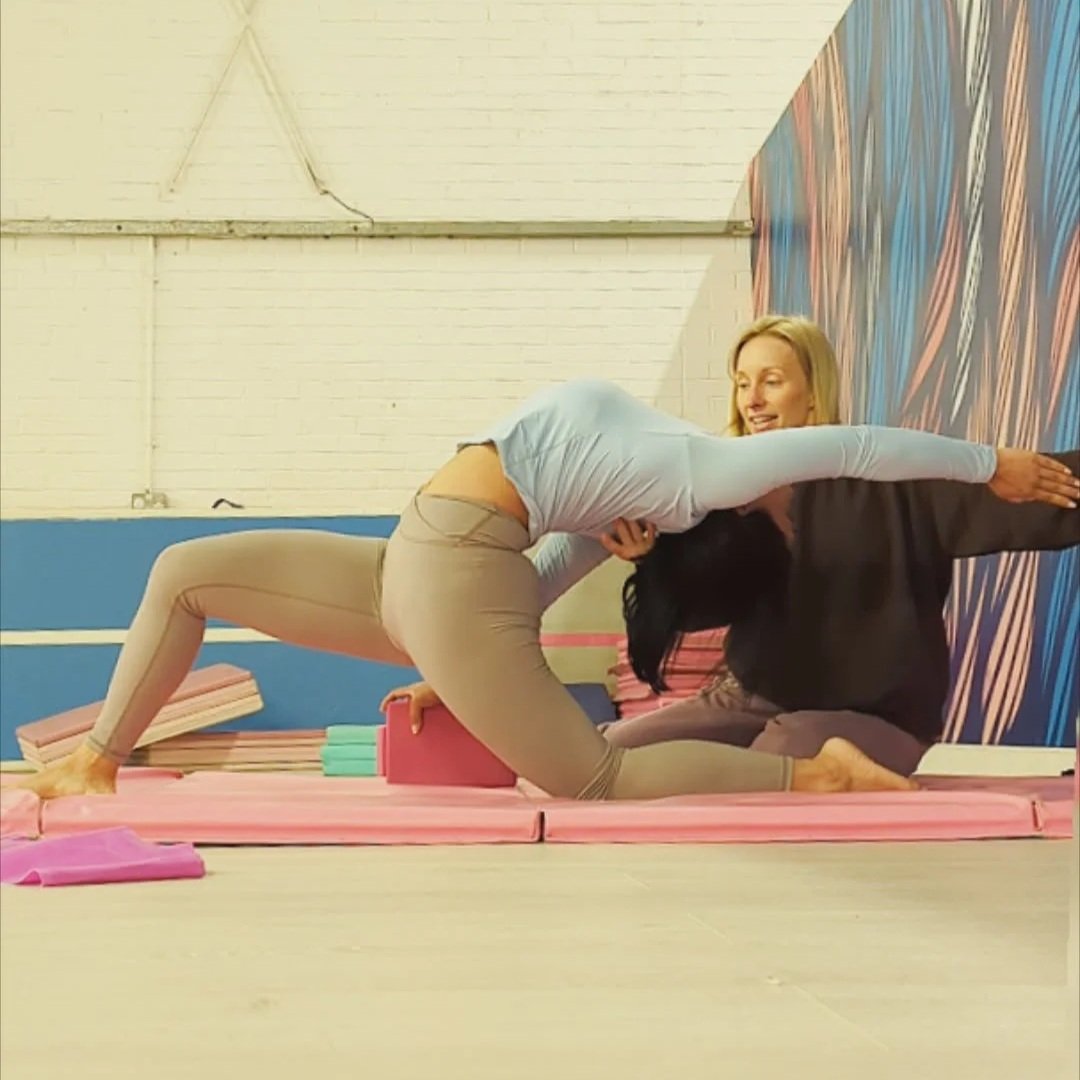
No one knows your body better than you-
I want to make sure you are working to the level you need to, not to the level I am forcing you to be.
Your Body Leads. I Guide.
My light touch style kind of coaching is the belief that the less you need me, the better! You are amazing and all I am doing is eeking out that tiny bit extra in you, to help you gain even more out of your own work.
I find this method respectful and most importantly, empowering.
When you learn to move from your own strength, your own control, and your own understanding, that’s when flexibility becomes sustainable, safe, and truly yours.
Then you can be super proud of your own work, and not feel like you have just jumped on some sort of flexy fair ride!